PEACEFUL PARENT, HAPPY KIDS ONLINE COURSE

Week 1: Peaceful Parenting 101

Welcome Back to Week 1 of the Peaceful Parent, Happy Kids Online Course!

I'm delighted that you're continuing to access this course! Since your Course cohort is complete, you now have access to the Graduates Course, which is simply the most recent version of my Online Course. Because all Course graduates have ongoing access, this allows me to keep one updated version of the Course, with any new improvements, that everyone who has ever taken the Course can access.

If you completed the Course previously, I think you'll notice something new as you read and listen. Now that you have all the puzzle pieces, everything makes sense in a new way. So as you re-listen to the early audios, you'll hear things you missed before, and you'll learn some things you didn't know you needed to learn the first time through.

If you started the Course but weren't able to complete it, you're not alone. Good for you for making it a priority to give yourself the support you need to continue your parenting journey. It isn't easy, I know, fitting this Course into your already full life. But I think you'll find it's worth it.We're going to work hard for the next twelve weeks, but I promise you'll be amazed at how well this approach to parenting works. Together we can do hard things. Let's do this!

No one is peaceful all the time. But when you commit to regulating your own emotions, connecting with your child, and coaching instead of controlling, your heart gets a lot more peaceful.

That loving feeling spreads through your home, so that everyone you live with responds to it. Over the next 12 weeks, these ideas will help you shift your family to less drama and more love.

Conventional parenting motivates children with fear. Fear of punishment, fear of rejection, fear of not being good enough, fear of losing the parent's love.

Peaceful parenting motivates the child with love. When children feel loved and accepted for who they are, even with all their inconvenient feelings and desires, they blossom. Their strengthened trust in their parent allows them to express their past hurts and let them go, so they can leave old baggage behind and grow into their best selves.

Conventional parenting motivates children with fear. Fear of punishment, fear of rejection, fear of not being good enough, fear of losing the parent's love.

Peaceful parenting motivates the child with love. When children feel loved and accepted for who they are, even with all their inconvenient feelings and desires, they blossom. Their strengthened trust in their parent allows them to express their past hurts and let them go, so they can leave old baggage behind and grow into their best selves.

Many parents get excited about a more peaceful home, so they immediately stop punishing. That's a good thing, because it stops the erosion of your child's trust in you. BUT it doesn't mean that your child will automatically do what you want, now that you've dropped your usual ways of getting him to cooperate. Without threats, bribes, yelling and punishment, your child has to WANT to cooperate.

The truth about rage is that it only dissolves when it is really heard and understood, without reservation.

The more you empathize, the more your child's emotion will shift from anger to the tears and fears that lurk beneath the anger. When you create safety by reacting with love to your child's outbursts, his anger will dissolve and he'll show you the more vulnerable emotions that are driving it. So when your child gets emotional, even rude, just take a deep breath, empathize, and invite connection.

Reading

Have you started Peaceful Parent, Happy Kids yet? Please read the Introduction this week (through page xxvii), and then begin the first section, which is called "Regulating Yourself" (Pages 3-35). We'll finish that section next week. Please feel free to underline, highlight and jot questions as you go, which will help you to make the most of the material in the book and of our time together in the course.

To make the most of this course, I encourage you to find time to do the reading. I know that when teachers assign you to read a chapter for homework, they often review the chapter in the next class. But I figure that you paid good money for this course because you want support to put the ideas in the book into practice. So we're using the book as our starting place, but going deeper into the material. If you skip the reading, you'll miss some important information, because in my lectures I won't be repeating what's in the reading.

If you don't have time to read, please consider getting your hands on the audio book. (I'm afraid that I can't give it as part of the course because the audio publishing company owns the audios, so I don't even have a copy!) Many parents tell me that listening to the book made it possible for them to squeeze in "reading" time.

Audio Lecture

In this audio, I'll introduce you to the 3 big ideas of Peaceful Parenting:

  1. Regulating your own emotions to return yourself to calm.
  2. Connecting with your child
  3. Coaching instead of controlling.

Of course, each of these three ideas has a full chapter of its own in Peaceful Parent, Happy Kids, so this week I will just introduce them. Then, we'll spend the rest of the audio giving you some tools to help you get the most out of this course. We'll discuss:

Save All Audios to Dropbox

Save all of this week’s lecture audios & daily inspirations

Audio Quick Tips

You'll find this week's audio lesson below. Play from this page using the orange PLAY button. You may download for later listening using one of the blue "Save" options below the player.

For step-by-step instructions to listen offline on your mobile device or computer using one of the blue "Save" options, please read our Audio FAQs.

To download audio for later listening: Either click the "Save To Dropbox" button to save directly to your Dropbox account or click the "Save To Computer" button. PLEASE NOTE: The "Save To Computer" button opens a NEW window where you can right click on the audio file to "Save As". If your browser settings do not allow this NEW window to open, please try another browser.

Want to save ALL of this week's audio to Dropbox in one click? Just click the blue "Save ALL Audios To Dropbox" button below, which will save the lecture, AND all the Daily Inspirations from this week to your Dropbox account all at once.

If you don't have a Dropbox account, have questions about listening offline or on your mobile device or tablet, please read our Audio FAQs.

Listen to the Lecture Now

#1 Daily Inspiration - Loving Yourself0:000:00
LIVE1xSpeed1  
playerjs
9.49.3

Daily Inspirations

In addition to the main audio, every week I will give you five other very short audios (3-4 minutes in length.) These are meditational, but they aren't just meditations. They're designed to help you rewire your brain, by giving you practice in shifting your emotional state and by practicing love. If you meditate regularly, that's terrific. But please do listen to these inspirations daily as well. They're an important part of transforming your relationship with your child. And they build on each other, so it's more effective to listen to them in order.

You'll find this week's Daily Inspirations below. Please listen to one each day this week. If you want to listen to more than one, or listen to one over and over, that's terrific.

This Week: Daily Inspirations #1-5

#1 Daily Inspiration - Loving Yourself0:000:00
LIVE1xSpeed1  
playerjs
9.49.3
#1 Daily Inspiration - Loving Yourself0:000:00
LIVE1xSpeed1  
playerjs
9.49.3
#1 Daily Inspiration - Loving Yourself0:000:00
LIVE1xSpeed1  
playerjs
9.49.3

Homework

Journal Prompts and Exercises To Do with Your Child

No, this isn't like homework at school. This is fun, a chance to explore and play with these ideas, to deepen your understanding and your ability to put these ideas into practice. It's just for your learning, so you don't have to turn it in, or worry about what anyone else will think of your answers.

Do you have to do the homework? No, of course not. But there's great learning in it, so why throw away an opportunity to learn that you've paid for?

Each week's homework has four tabs:

Journal Prompt - Questions to help you learn from the audio.
Going Deeper - More questions to get you thinking about how these ideas apply to your life.
Practice - A practice exercise to use with your child. Print these out and post them where you'll see them.
Reflections - Questions to help you reflect on what happened when you did the exercise with your child.

This packet is available in Word, so you can type answers right on your computer, but also as a PDF, in case you want to print it out and fill it in by hand.

Transcript- Sleep and Potty Learning Q and A #20

Transcript- Social Skills and Friendships Q and A #25

Transcript- Special Needs and Trauma Q and A #17

Transcript -Special Time Q and A #3

Transcript- Strong Willed Kids Q and A #12

Transcript -Transition to Peaceful Parenting Q and A #1

Work & Family Life Newsletter Review

Your Child's Brain

1 2 3 4 5 6 7 8 9 10 11 12 13 14 15

I also encourage you to begin a parenting journal, either on your computer, or in a notebook that you keep handy.

This journal is only for you, meaning that no one else will read what you're writing. But research shows that journaling and reflecting about your emotional experience helps grow your insight, as well as your capacity to self-regulate.

Try to make a short daily entry about how things feel with your child, whether difficult or delightful. Write about any especially challenging moments, what led to them, and how you handled them. Also record success stories, large and small, and what led to those. Keep a list of questions that you'd like to explore.

Recommended Resources

Every week, I will suggest books or other resources that I love, that I think will deepen your understanding of the week's topic. Don't stress about finding time to read these during the course. Consider it a bonus reading list that you can pursue when you have the time. And you don't need to buy these books; ask for them at your local library.

Guided Meditation

This week's resource is free options for guided meditations online. Meditation has been repeatedly proven to make people healthier, happier and calmer. Personally, I credit meditation with making me who I am today, more than all my reading, therapy, etc.

Meditation has been proven to change your brain, giving you more self-regulation and making you happier. That's great support to give yourself to improve your parenting. Guided meditations are usually the easiest way to begin meditating. So if you can swing it, I encourage you to listen to guided meditations on the weekends or whenever you have a chance.

Guided meditations are usually the easiest way to begin meditating. There are many sources for free meditations online. Here are just a few that I have used or had recommended to me by trusted sources.

Mindfulness: Finding Peace in a Frantic World

The authors of the book Mindfulness: Finding Peace in a Frantic World offer this terrific website with free short guided meditations of different lengths, including a "Three Minute Meditation," a "Body Scan," a silent meditation punctuated by occasional bells, and -- wait for it -- a "Chocolate Meditation."

Meditations with Tara Brach

I love Tara Brach. There are hundreds of free 30 minute meditations that you can stream or download. (She also has free talks, which are great, but it's the meditations I'm recommending here.) These meditations are partly silent; she gets you started meditating and then brings you back as your attention wanders.

Guided meditations from UCLA

Each week has a different theme, and usually includes some introductory comments, a guided meditation, some silent practice time, and closing comments. Presented by the UCLA Mindful Awareness Research Center.

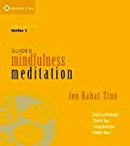
And if you like to have your audios as CDs, below is a link to a set of CDs and meditation instruction by the fabulous Jon Kabat-Zinn, who developed Mindfulness Based Stress Reduction (MBSR), one of the most scientifically validated (meaning it has been researched a lot) approaches to meditation.

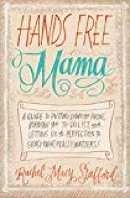
Finally, if you're wondering what I mean on the audio when I urge you to be "more present," then I have three terrific books for you: Hands Free Mama, Hands Free Life, and Only Love Today, all by Rachel Macy Stafford. They're fun, inspiring reads that will bring you to tears and remind you of what's really important.

Meditation Book
Meditation Book

Guided Mindfulness Meditation

by Jon Kabat-Zinn

GET THIS BOOK ON AMAZON
Hands Free Mama Book

Hands Free Mama

by Rachel Macy Stafford

GET THIS BOOK ON AMAZON

Bonus

Our bonus this week -- and for the entire course, and after the course ends -- is the support of other parents who are also on the journey to use peaceful parenting. If you haven't yet joined the Peaceful Parenting Collective on Facebook, don't miss this opportunity. This private Facebook group is only available to parents who are currently taking this course, or who have graduated from it in the past.

While the Admin of this Facebook page is a parenting coach I trained and supervise -- the wonderful Sarah Rosensweet -- this is primarily a community forum for parents to share successes and frustrations, and give each other support and encouragement.

Peaceful Parenting Collective Facebook Group

Just click at the top of the page to join the group.

Extra Credit Bonus Homework

As you know, the text for this course is Peaceful Parent, Happy Kids. But if you're also working your way through the Peaceful Parent, Happy Kids Workbook as you do this course (as are many Course grads who have already done the Course Homework on their first time through), here are some extra assignments from the Workbook that you can use to enhance your learning this week.

  1. Practice: Setting Your Intention (page XXV) If you don't know where you're going, you're likely to end up somewhere else!
  2. Practice: A Letter to Yourself (page XXV) Write the pep talk that will inspire you when you're feeling frustrated and stuck.

Next Week

Week

02

Regulating Your Own Emotions

Children depend on us to help them self-regulate, so your ability to calm yourself is your most important parenting skill. In this session, I'll give you tools to notice when you're getting dangerously close to the edge, and powerful practices to return yourself to calm. If you're a yeller, here's where you take your Vow of Yellibacy.

Available June 5, 2019