![[PARENTING: EI] - Empathy: The Parenting Skill That Changes Everything](https://files.us-siteglide.com/cdn-cgi/image/format=auto,onerror=redirect/instances/83/assets/img/calmmomcryingtoddleroutside.jpg?updated=1789526281)
I see parents make remarkable breakthroughs every day. The biggest shift rarely comes from remembering better words to say in the moment, or trying to convince your child that your rule makes sense.
It comes when a parent begins to see the world through their child's eyes.
That's empathy. And when parents practice it, everything changes—not because children get everything they want, but because they finally feel understood.
Empathy doesn't mean agreeing with our children, or letting them do whatever they want just because we understand why they want to. But it does mean that while our children don't get everything they want, they get something better: Someone who understands and accepts them, no matter what.
That understanding helps a child’s nervous system feel safe enough for big emotions to begin settling. Only then can children think, learn, problem-solve, and cooperate.
Children don’t need us to fix every feeling. They need to know they don’t have to face those feelings alone.
And once we understand our child’s perspective, we’re better able to help them meet the needs they were trying to meet all along—from feeling connected and valued to feeling capable and understood. When children’s underlying needs are met, their behavior improves.
Empathy is the foundation of emotional intelligence. It’s also the foundation of effective parenting. Why?
- Because empathy makes it possible for you to understand your child and strengthen your bond.
- Because it helps you respond to the child in front of you rather than reacting from the wounds and fears of your own childhood.
- And because without feeling understood, our children simply don’t feel loved, no matter how much we love them.
What Exactly Is Empathy?
Empathy is often described as seeing things from another person’s point of view. But a more accurate definition might be feeling from another person’s point of view.
Empathy isn’t just an idea. It’s something we experience in our bodies. Empathy is controlled by the insula in our right brain. The structure of the right brain is formed during the first two years of life, before your baby becomes verbal.
Scientists suspect that the right brain is the orchestrator of intimacy. The insula connects the brain with the heart, digestive organs, and skin. So when our heart leaps, or our stomach turns, or our skin crawls, the insula is sending us a message. And when we feel deep empathy, we feel it in our bodies.
When someone we love is hurting, we may feel a heaviness in our chest, a knot in our stomach, or tears rising in our eyes. Our brains and bodies are wired to pick up emotional signals from the people around us.
Children are especially sensitive to the emotional signals of their parents. Your tone of voice, facial expression, posture, and presence all communicate whether your child is safe, understood, and still connected to you.
When you respond with warmth and understanding, your child’s nervous system receives the message:
You’re safe. You’re not alone. I can handle your feelings.
That sense of safety helps your child move out of fight, flight, or shutdown. As the stress response begins to settle, the parts of the brain responsible for language, reasoning, impulse control, and problem-solving can come back online.
Over thousands of these everyday moments, children build the neural pathways that help them regulate emotions, recover from disappointment, and stay connected to other people.
Empathy strengthens the relationship between parent and child. It helps a child feel understood and less alone with their pain. Empathy heals.
And the experience of empathy teaches the little one about the deepest ways that humans connect, providing her with a launching pad for every future relationship. In fact, the experience of empathy wires the child's brain for emotional health. Children who receive empathy not only feel more connection to others throughout their lives, they're more compassionate and understanding, so they enjoy deeper relationships.
How Do Children Develop Empathy?
Empathy develops naturally as part of healthy emotional growth—as long as children experience empathy from the people who care for them.
That’s why parenting with empathy is a double gift. In the moment, your empathy helps your child manage an overwhelming emotion. Over time, experiencing your empathy teaches your child how to understand and care about the feelings of others.
This giving of empathy is also a gift to you, because children who feel your empathy are much more cooperative in accepting your guidance. Translation: It makes parenting a lot easier!
But many parents find the idea of parenting with empathy intimidating. How exactly do you “do” it?
You already know.
Every time you say, “That was really disappointing,” or “It looks like you had a hard day,” you’re being empathic.
Every time you pause before reacting and try to see the situation from your child’s perspective, you’re practicing empathy.
Every time you communicate, “I understand why you feel that way, even though the answer is still no,” you’re offering empathy.
Sounds simple, right? Then why is empathy so powerful?
Children Need Our Help With Big Feelings
Human beings are creatures of emotion. Feelings arise within us throughout the day, influencing our bodies, our moods, and our actions before eventually passing away.
Think of the strongest emotions you’ve felt in the past month. Now imagine experiencing those emotions with a child’s developing brain, limited life experience, and still-emerging capacity for self-regulation.
Children are swept by powerful feelings many times a day. They need our help learning to navigate those emotions without becoming overwhelmed by them. Before children can consistently regulate themselves, they borrow our regulation.
Your steady voice, accepting presence, and calm confidence provide the co-regulation that eventually becomes your child’s own capacity for self-regulation.
Most of the time, when children—and adults—feel that their emotions are understood, they become more able to accept and experience those feelings without being controlled by them. The "message" is delivered. After this, the emotions lose their charge and begin to dissipate. We don’t have to act on those emotions, or even to like them. We merely have to acknowledge their presence, and they begin to evaporate.
Once children no longer have to struggle to make us understand, the emotion can begin to move through them. That’s why empathy so often reduces crying, anger, and tantrums. Not because empathy erases the feeling, but because the child no longer has to carry it alone.
We don’t have to act on every emotion. We don’t have to agree that the emotion fits the situation. We don’t even have to like the feeling. But when we can acknowledge its presence, the emotion often begins to lose its intensity.
Feelings that children don’t feel safe expressing don’t simply disappear. They often emerge in other ways—through aggression, anxiety, withdrawal, perfectionism, nightmares, physical complaints, or meltdowns that seem to come “out of nowhere.”
Our empathy—our acceptance of our child’s emotional experience—teaches children that feelings are not dangerous or shameful. Everyone feels angry, frightened, jealous, disappointed, or overwhelmed sometimes. There’s even a name for this feeling. It can be felt, survived, and managed.
The child feels understood and accepted. They learn that they aren’t alone with the crush of powerful emotions. It’s safe to feel.
That safety is the first step toward working through emotions and learning to manage them. That’s why empathy is the foundation of emotional intelligence.
What Empathy Isn’t
Empathy Isn’t Permissiveness
You can—and should—set limits whenever they’re necessary. Empathy simply means acknowledging your child’s feelings about the limit.
For example:
“I know you wish you could keep playing. It’s hard to stop when you’re having fun. It’s still time to go.”
Or:
“You’re really angry with your brother. No hitting. You can tell your brother in words how mad you are.”
This is the sweet spot of peaceful parenting: empathy with firm limits.
You don’t need to defend the limit or convince your child to like it. Your job is to hold the boundary while making room for their disappointment, frustration, or anger.
It matters deeply to children that we can tolerate their unhappiness with us—and continue loving them even when they aren’t currently in touch with their love for us.
Empathy Isn’t Solving the Problem
Your goal isn’t to make every uncomfortable feeling disappear or immediately solve the situation for your child.
In fact, jumping in too quickly with advice or solutions can communicate that you don’t believe your child can handle difficult emotions.
Instead, stay with the feeling first.
Listen. Acknowledge. Let your child know you understand.
Once the emotional intensity has eased, your child will be more able to think about what to do next. Solutions come later.
That may require you to manage your own anxiety about the situation so you can resist the urge to rescue.
Empathy Isn’t Agreeing
Accepting your child’s feelings doesn’t mean agreeing with their interpretation of events or endorsing the behavior they want to choose.
You’re simply communicating that you understand their experience.
“You feel like your teacher was unfair.”
“You really wish you could have what your friend has.”
“You’re angry that I said no.”
Understanding is not the same as agreement. But anyone who has ever felt deeply understood knows what an extraordinary gift it is.
Empathy Isn’t Probing
“Tell me how you feel” doesn’t communicate empathy.
Empathy means noticing and gently acknowledging what your child is already showing or telling you.
“You wish you could play longer.”
“Your face looks worried.”
“You got very quiet when she said that.”
You’re opening a door, not demanding that your child walk through it.
Empathy Isn’t Trying to Cheer Your Child Up
When our child is hurting, it’s natural to want to make the feeling go away.
When we say, “Don’t be sad,” “It’s not a big deal,” or “You’ll feel better tomorrow,” we mean to comfort. But to the child, those responses can feel like pressure to stop feeling what they’re feeling.
Empathizing with the difficult feeling is usually the fastest way to help it begin to dissipate. Arguing a child out of a feeling often pushes it underground, where it waits to resurface later.
Once your child has had a chance to notice, experience, and express the emotion, they’ll become more ready to shift attention, change the scene, or consider another perspective.
This may take a while at first. But it often becomes faster as children learn that no one is minimizing their emotions or pushing them to “get over it." Your empathy gives your child the message that all of them is acceptable—even the messy, inconvenient, uncomfortable feelings.
Empathy Isn’t Arguing With the Feeling
Feelings aren’t right or wrong. They simply are.
Your child may be furious about something that seems trivial to you. They may be frightened by something you know is safe. They may be heartbroken by a friendship you expect them to outgrow.
Correcting the feeling doesn’t make it disappear. It simply leaves your child alone with it.
You can offer perspective later. Start with connection.
What Empathy Is
Listening Without the Pressure to Fix Anything
Take a breath. Remind yourself that you don’t need to solve the entire problem in this moment.
Try not to take your child’s feelings personally—even when those feelings are directed at you.
Your calm presence is already helping.
Acknowledging and Reflecting
Put what you notice into simple words:
“It sounds like you’re really angry with your brother.”
“You were counting on being invited.”
“It seems like you’re worried about the field trip.”
“You worked so hard on that, and it didn’t turn out the way you hoped.”
You don’t need a perfect script. Your child is listening for the understanding beneath your words.
Resonating With Your Child’s Experience
What matters most is that your child FEELS your understanding. Match your reaction to the intensity of your child's experience.
Being a bit downcast because his team lost the soccer game doesn't merit a reaction from you as if someone had died. Similarly, mechanically reassuring, "It can be hard when your boyfriend splits up with you" is likely to evoke hysteric rage from your teen.
Empathy isn’t parroting words. It’s allowing yourself to be touched by what your child is experiencing while remaining grounded enough to support them.
You Won’t Always Get It Right
Of course, none of us responds with empathy every time. We’re human.
Sometimes we’re exhausted, worried, distracted, or emotionally triggered. Sometimes our child’s reaction seems so unreasonable that we can’t find our empathy in the moment. Sometimes we say the exact opposite of what we wish we had said.
Children don’t need perfect parents.
They need parents who notice when they’ve missed the moment, take responsibility, reconnect, and try again.
You might say:
“I was so focused on getting us out the door that I didn’t listen. You were really upset, and I’m sorry I brushed you off.”
Those moments of repair teach children something just as valuable as empathy itself: Relationships can survive mistakes. We can hurt each other, take responsibility, and find our way back to connection.
The Gift of Feeling Understood
Every time you pause before reacting...
Every time you wonder what your child’s behavior is communicating...
Every time you say, “You really wished...” or “That was hard...”
You’re doing far more than helping your child through one difficult moment.
You’re teaching your child that emotions are safe and manageable. You’re showing them that relationships are strong enough to hold hard feelings. And you’re helping them develop the inner resources to understand themselves and offer compassion to others.
That’s why empathy isn’t simply one parenting tool among many.
It’s the foundation everything else is built on.
"When children feel understood, their loneliness and hurt diminish. When children are understood, their love for their parent is deepened. A parent's sympathy serves as emotional first aid for bruised feelings. When we genuinely acknowledge a child's plight and voice her disappointment, she often gathers the strength to face reality."
-Haim Ginott
For More on Empathy: When Empathy Doesn't "Work"
Recommended Resources
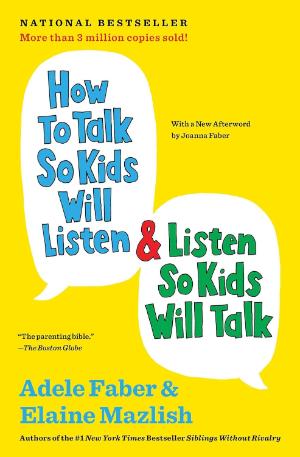
How to Talk So Kids Will Listen and Listen So Kids Will Talk, by Adele Faber and Elaine Mazlish offers extremely helpful advice for putting empathy into practice.