Why do we need traditions and rituals? It's primal. They help us move emotionally from one place to another; they ease pain, acknowledge growth, and create connection.
Most parents discover early on that daily rituals like bedtime stories and goodbye hugs, done the same way every time, make separations easier and help children feel secure. Traditions like taking a picture on the first day of school or carving pumpkins together at Halloween help children integrate the changes of the year. Rituals like building a sukkah together or attending Christmas Eve Mass communicate religious meaning in a way children can feel. And many parents who don’t relate to organized religion find that traditions like a Thanksgiving gratitude practice give their family the meaning and anchoring they’re looking for, and pass on their values.
It's a cliche that children grow up too fast, though it sure doesn't seem like it on those long days when you just can't wait to get them to bed. But when your kids look back, these are the memories that will define family for them. One way to insure that warm moments outweigh hard ones is to build traditions and rituals into your family life.
Studies show that happy families not only have treasured traditions, they constantly evolve new ones that help them find their way through the inevitable changes of growing up. But don't worry if you aren't consciously "creating" traditions. Your family is naturally developing them, from Sunday morning pancakes to bedtime blessings. The way you celebrate birthdays or mark anniversaries, the way you say goodbye to each other every morning or shop for fall clothes each school year; anything repeated is a tradition, the stuff of which memories are made. You don't need anything fancy, just love. What creates a tradition is revisiting it year after year, updating as your child gets older.
"The idea of starting a family tradition sounds overwhelming."
Don’t worry. Your family already has traditions, whether or not you set out to create them: Sunday morning pancakes, bedtime blessings, the way you say goodbye every morning, celebrate birthdays, mark the passing of a pet, or shop for fall clothes each school year. Anything you repeat is a tradition, the stuff of which memories are made. You don’t need anything fancy, just love.
"Ok, but how do I create traditions that nurture family connection?"
It’s simple. Try something new, and if you like it, repeat it. Talk about it, and look forward to it together. What makes it a tradition is coming back to it year after year and updating it as your child grows. Eventually it takes on a life of its own and becomes a sustaining part of your family’s culture. Families who thrive don’t just treasure their old traditions. They keep creating new ones to help everyone through the changes of growing up.
"And what about rituals? Are they different from traditions?"
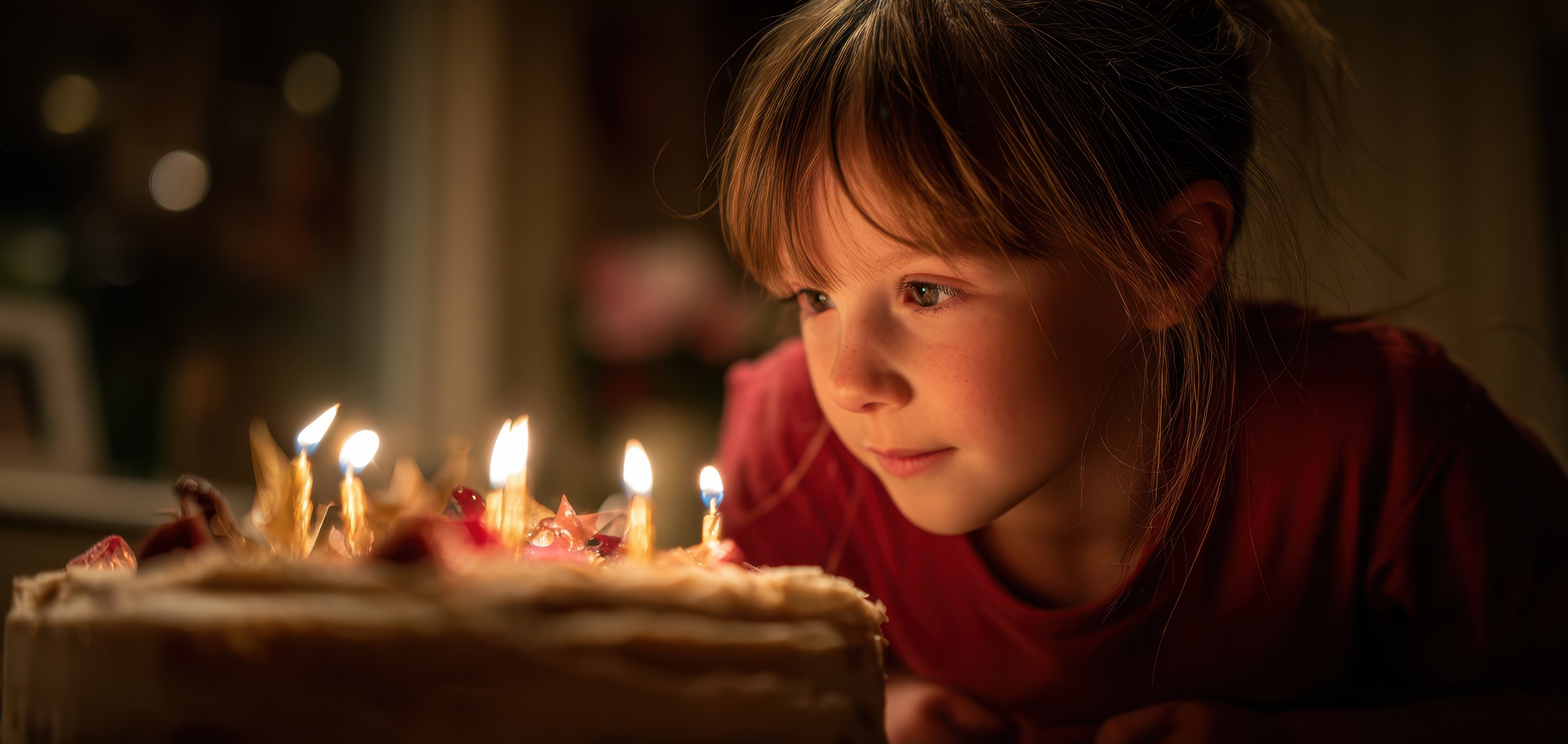
You might think of a ritual as a tradition carried out in a more sacred way, usually exactly the same way every time. Singing the Hanukkah blessings or saying grace before meals are obvious examples, but so are singing “Happy Birthday” and blowing out the candles. “Sleep tight, don’t let the bedbugs bite!” may not seem sacred, but repeated chants like this are essentially prayers that meet a deep human need. Kids get a real sense of safety from them.
"Are rituals hard to create?"
No! Most rituals open with an invocation, like lighting a candle or repeating a phrase or song. This signals our psyches to pay attention. Sometimes that’s all there is to a ritual, as with a special goodbye saying. Other rituals, like going around the Thanksgiving table to say what we’re thankful for, have “content.” And almost all of them have a closing that signals the sacred space is over and we’re returning to daily life, like when the birthday candles are blown out or we say “Amen” at the end of a prayer.
Family Tradition and Ritual Ideas to Try
When children know what’s coming, their bodies can relax. That’s why small, predictable moments of connection matter so much, especially at transitions, when kids are most likely to come apart. Here are some ideas to get you started. Pick one or two that feel right, and let your family make them its own.
Mornings and goodbyes
- A special goodbye phrase or handshake that’s just yours
- A “kiss in the palm” your child can hold onto all day
- A short note tucked into a lunchbox
- Waving from the window, every time
Reconnecting after time apart
- When you pick your child up: "There are those eyes I missed looking into!" (kiss their eyes), "There are those hands I missed holding!" (kiss their hands)
- Ten minutes of snuggling on the couch before anyone checks a phone or starts dinner
- Silly greeting song you sing to each other.
Mealtimes
- Lighting a candle at dinner
- Holding hands for a moment of thanks before eating
- “Rose and thorn”: everyone shares the best and hardest part of their day
- Pancakes, waffles, or pizza on the same night every week
Bedtime
- The same three books, songs, or blessings in the same order
- Telling your child one thing you loved about them today
- A whispered phrase like “I love you all the way to the moon and back”
Birthdays and milestones
- A birthday interview each year (favorite food, best friend, what I want to be), saved in a folder
- Measuring height on the same doorframe
- A first-day-of-school photo in the same spot
- Telling the story of the day your child was born
Hard times
- Saying goodbye to a pet by planting something, writing letters, or sharing favorite memories
- Before a move, walking through each room together to say goodbye to the house
- For families with two homes, a transition object that travels with your child, and the same goodbye phrase every time
- A “do-over” ritual after a rough day: a cup of cocoa and a fresh start
Seasons and holidays
- Picking apples in the fall, cutting paper snowflakes in winter, planting seeds in spring
- Going around the Thanksgiving table to share gratitude
- Reading the same holiday book aloud every year
- A family walk on the first snowfall
- Thanksgiving Rituals To Teach Gratitude
- 50 Meaningful December Traditions for Families
- New Years Rituals for Families
- Valentine's Day Family Traditions
- Autumn Holiday Rituals that Nurture Family Connection
- 20 Ways to Celebrate Halloween That Bring Your Family Closer
As your child grows
Traditions should grow with your child. A teenager may roll their eyes at the bedtime song, but would still miss the Sunday pancakes. Ask your kids which traditions they want to keep, and let them invent new ones. Traditions they help create become theirs.
Recommended Resources
Fiese, B. H., Tomcho, T. J., Douglas, M., et al. (2002). A review of 50 years of research on naturally occurring family routines and rituals: Cause for celebration? Journal of Family Psychology, 16(4), 381–390. https://doi.org/10.1037//0893-3200.16.4.381
What it found: It’s a qualitative review of 32 publications appearing since J. Bossard and E. Boll’s (1950) seminal work on family rituals. Family routines and rituals were found to be related to parenting competence, child adjustment, and marital satisfaction. According to the APA release, during infancy and preschool, children are healthier and their behavior is better regulated when there are predictable routines in the family.
Want some more inspiration? Check out the wonderful books below.
PLEASE NOTE: These books are Amazon links with photos of the books. If you are not seeing them on your page, it may be that your browser is not picking them up, or Ad Blocker in Chrome is blocking the Amazon links. You can disable Ad Blocker just for this site if you like. Or you may want to try another browser. Enjoy!