
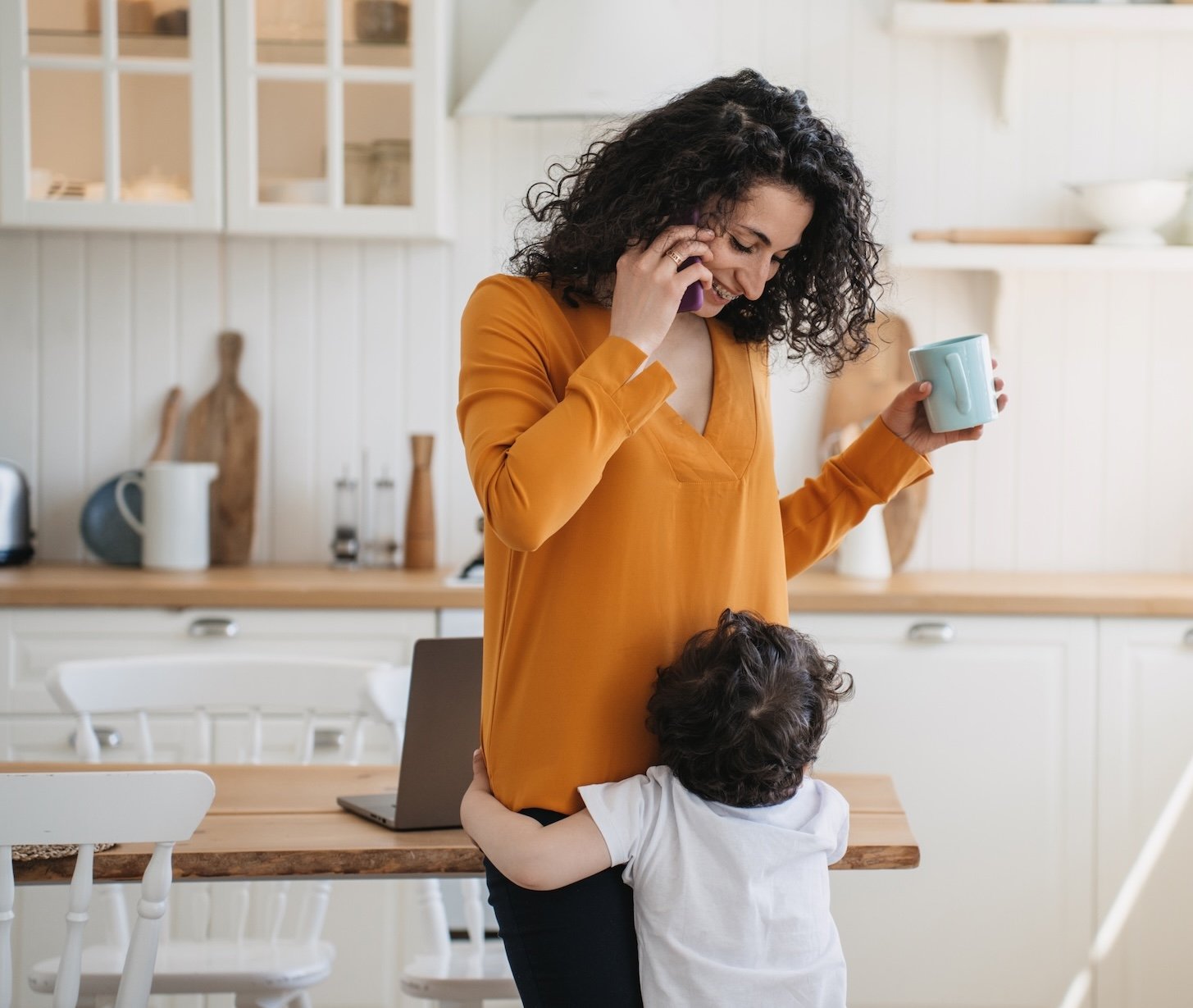
It isn't enough. It was never meant to be enough.
For most of human history, mothers didn't raise children alone. They raised them inside a web of people — grandmothers and grandfathers, aunts and uncles, older siblings, neighbors, the whole fabric of a community that considered children a shared responsibility. Fathers were present and involved. Older children helped care for younger ones. Grandparents transmitted wisdom and provided hands-on help. No one person was expected to be everything to a child, because no one person was meant to be. This wasn't a luxury. It was the architecture of how human children were raised, and how mothers survived raising them.
That village is largely gone now. And we have not replaced it with anything adequate.
What we have instead is a culture that celebrates maternal devotion while systematically withdrawing the support that makes it sustainable. We are one of the only wealthy nations in the world with no federally mandated paid maternity leave — sending mothers back to work weeks after giving birth, before their bodies have healed and before any semblance of a rhythm has been established. We have workplaces that treat pregnancy as an inconvenience. We have neighborhoods where mothers can live side by side for years without really knowing each other. We have a mental health crisis among mothers of young children that we discuss as a personal problem — as though it were a matter of individual resilience — rather than the structural failure it actually is.
And into this isolation, we have poured an extraordinary amount of advice about how to be a better mother. We have given mothers smartphones so they can scroll through an endless feed of other people's highlight reels at 2am while nursing a baby in the dark. We have given them influencers performing effortless, aesthetically perfect motherhood. We have given them comment sections and comparison and the particular cruelty of seeing everyone else appear to be thriving while you are just trying to get through the day. We have given them more information about optimal child development than any generation of mothers in history — and less actual help than almost any of them.
What the Research Tells Us
Studies consistently show that maternal wellbeing is less dependent on what mothers do and more dependent on whether they feel supported. Not just practically — though help with the physical labor matters enormously — but emotionally. Seen. Understood. Not judged.
Maternal loneliness is now recognized as a significant public health concern. And loneliness, it turns out, is not just painful. It is physiologically stressful in ways that affect everything — our patience, our nervous system regulation, our ability to be present with our children. A mother who is chronically unsupported is not failing at self-care. She is responding normally to an abnormal situation.
This matters for your children too. Because we know that the single greatest predictor of a parent's ability to be emotionally available to their child is whether that parent themselves feels emotionally supported. You cannot pour from an empty vessel — not because of some motivational poster wisdom, but because of basic neuroscience.
I want to say something clearly: the problem is not you. The problem is that you are trying to do something that was never designed to be done alone.
This Is Not About Loving Your Children Less
None of this means you don't love your children. Of course you do. That love is probably the most fierce and consuming thing you have ever felt. What inadequate support does — the exhaustion, the isolation, the relentless mental load — is not diminish your love. It makes it harder to feel. Harder to be present. Harder to get down on the floor and just be with your child without the weight of everything undone pressing down on you.
Some mothers spend Mother's Day craving an hour of quiet with no one touching them. Others spend it grieving the connected time with their children that the busy work week never seems to allow.
Both of those are the same longing, really — for enough support, enough space, enough replenishment that you can actually inhabit your own life. That you can feel, in your body, the love that is always there.
The exhaustion is not a measure of how much you love your children. It is a measure of how much you have been asked to carry, alone, without enough help.
What You Actually Need — and Deserve
You need someone who asks how you are and waits for the real answer.
You need help that is offered, not extracted through an exhausting negotiation.
You need time that is genuinely yours — not stolen guiltily, not earned through productivity, just yours.
You need to be in the presence of other mothers who will tell you the truth about how hard this is, so you stop concluding that the difficulty means something is wrong with you — or with your love for your children.
You need a partner, if you have one, who sees the invisible work and shares it without being asked.
You need a culture that values what you do — not with greeting cards once a year, but with policies, structures, and communities that actually make the work of raising children sustainable.
And you need to know — to really know, not just nod at — that asking for these things is not weakness or selfishness. It is the precondition for everything else you want to give. It is, in fact, what makes it possible to be the mother you most want to be.
This Mother's Day
If someone asks what you want today, I hope you'll tell them something true.
Not "I'm fine." Not "just some quiet time." Something true.
And if there's no one asking — if that's part of what's hard today — then let this be a small reminder that your needs are not an afterthought. They are not the last item on the list, attended to if there's anything left over.
You matter. Not because of what you do for everyone else. Just because you do.
The village failed you. That is not your fault. But you can begin, one honest conversation at a time, to build something back.
You were never meant to do this alone. And the fact that it's hard — really, genuinely hard — doesn't mean you're doing it wrong.
It means you're human. It means you need what all humans need.
It means you deserve more than you've been given.