![[PARENTING: EI] - Why Is Your Child So Angry? (What It’s Really Telling You)](https://files.us-siteglide.com/cdn-cgi/image/format=auto,onerror=redirect/instances/83/assets/images/No-Girl.jpeg?updated=1791906074)
This article will help you understand what anger is really telling you. If you’re looking for what to do in the moment, you can start with What to Do When Your Child Is Angry.
Maybe your child yells, argues, melts down, or even lashes out physically. It can feel alarming — and confusing.
You might wonder:
- Why is my child so angry?
- Is this normal?
- Am I doing something wrong?
What’s important to understand is this:
Anger is not the problem.
Anger is a signal.
When we understand what that signal is telling us, everything shifts — including how we respond, and how our child learns to handle those big feelings over time.
(If you’re looking for what to do in the moment when your child is angry, you can find step-by-step guidance in When Your Child Gets Angry: The Cheat Sheet.)
Anger is a nervous system response
Anger is part of the body’s built-in protection system.
When children feel threatened — physically or emotionally — their nervous system shifts into what we often call the “fight” response. That’s when we see yelling, defiance, or aggression.
A child who is acting angry is a child whose nervous system feels under threat.
That “threat” might be something that seems small to us:
- Being told “no”
- A sibling conflict
- Frustration over something they can’t do
- Feeling rushed, tired, or overwhelmed
- Being instructed to turn off a screen
But for a child, especially one whose brain is still developing, these experiences can feel intense and unmanageable.
(You can learn more about how the nervous system shapes behavior in these videos.
So the anger we see is not a deliberate choice. It’s a reaction from a nervous system that feels overloaded.
Anger often covers more vulnerable feelings
Anger is what we see on the surface. Underneath, there is always something else.
Children, like adults, don’t just get angry. They get hurt. They feel disappointed. They feel scared, left out, embarrassed, or powerless.
But those feelings can be harder to tolerate.
Anger is often easier.
It can act like armor — protecting children from emotions that feel more vulnerable or overwhelming.
So instead of seeing “my child is being aggressive,” it can help to wonder what your child might be feeling underneath the anger.
Often, when children feel safe enough to experience those underlying feelings — the sadness, the fear, the hurt — the anger begins to soften and dissolve on its own.
(This is the heart of helping children with big emotions — you can learn more in Teaching Emotional Intelligence When Emotions Run High.)
Some children learn to default to anger
Not all children have equal space for their feelings.
In many families — and in our culture more broadly — vulnerable emotions like sadness or fear are not always welcomed. This is especially true for boys, who are often subtly or explicitly discouraged from crying.
Over time, some children learn that it isn’t safe to show certain feelings, so they push them down.
But feelings don’t disappear when they’re pushed away. They come out sideways — and very often, they come out as anger.
A child who seems “angry all the time” may actually be a child who doesn’t feel safe expressing the full range of their emotions.
When children don’t feel heard, anger escalates
Children calm down when they feel understood.
When they don’t feel heard, they don’t calm down — they intensify.
They raise their voice. They argue harder. They push back more strongly.
From the outside, it can look like defiance or disrespect. But from the child’s perspective, it often feels like no one is listening — and they have to make it louder.
Anger, in this way, becomes communication.
(In the moment, responding with empathy can help children feel heard — here’s what that looks like: When Your Child Gets Angry: A Step-by-Step Guide)
Anger often builds over time
What looks like an overreaction is almost never about that one moment.
Children experience many small disappointments, frustrations, and hurts throughout the day — things they don’t yet have the skills to process on their own.
They carry those feelings with them until they have a loving adult to help them unpack them.
You might think of this as an “emotional backpack.”
Over time, that backpack fills up.
And then something small happens — the wrong cup, a sibling’s comment, a limit being set — and suddenly there’s a big explosion.
But the intensity isn’t really about that moment. It’s the release of everything that has been building.
(If your child has frequent meltdowns like this, you may also find this helpful: When Your Child Is Hellbent on Misbehaving: Time to Invite a Meltdown?)
Why screens can make anger more intense
In today’s world, there’s another factor to consider.
Many children use screens — even unintentionally — as a way to calm themselves.
Screens can distract, and even soothe a child’s nervous system in the short term, with intense cycles of stimulation and relief. But when children rely on screens for soothing, they don’t get the practice they need to develop their own internal regulation.
So when the screen is removed, the child may suddenly feel overwhelmed — without the tools to manage those feelings.
That’s why reactions to turning off a device can seem so intense.
It’s not just about wanting more screen time. It can feel, to the child, like the loss of something essential that was protecting them from dysregulation--even though screens ultimately make dysregulation much worse.
Why anger looks like “bad behavior”
When children are in this dysregulated, “fight” state, the thinking parts of the brain are much less available.
That’s why we see:
- Yelling
- Hitting
- Refusing
- Talking back
- Explosive reactions
In those moments, children are not choosing their behavior in a thoughtful way.
They are reacting.
A dysregulated child cannot access self-control in that moment.
(This is why traditional discipline often backfires — you can read more in How to Help Your Child Cooperate Without Punishment.)
What this means for parents
When we see anger only as a behavior problem, we tend to respond with control, correction, or punishment.
But when we understand anger as a signal, we respond differently.
We begin to look underneath the behavior.
We focus on helping the child feel safe, understood, and supported — while still holding clear limits.
And that’s what allows change to happen.
When children feel safe enough to express their distress — instead of having to defend against it with anger — they gradually learn to move through those feelings without getting overwhelmed by them.
Over time, this is what builds self-regulation. Your child begins to recognize what they feel, tolerate those feelings, and express them in ways that don’t hurt themselves or others.
A different way to see your child
Your child’s anger does not mean something is wrong with them.
It means something inside them needs support.
When children feel safe enough to experience their feelings, and supported enough to handle them, they gradually develop the ability to manage even big emotions.
And over time, the anger that once felt overwhelming becomes something they can understand, express, and move through.
If you’d like support with those intense moments, you can find step-by-step guidance in What to Do When Your Child Is Angry, or learn more about helping your child build self-regulation skills over time in How to Help an Angry Child (And Build Self-Control Over Time)
Less drama, more love.
Recommended Resources
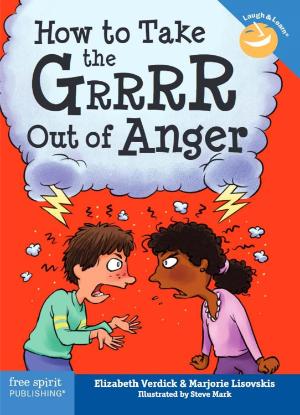
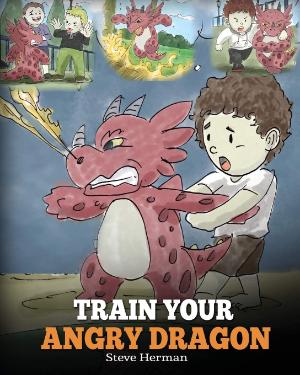
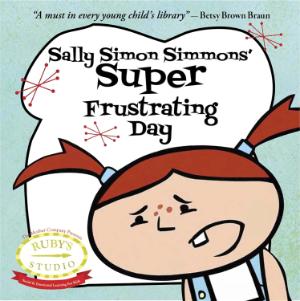
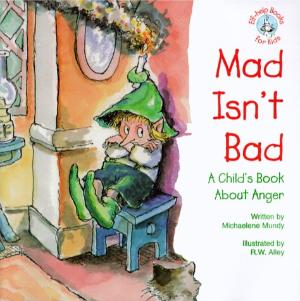
PLEASE NOTE: These books are Amazon links with photos of the books. If you are not seeing them on your page, it may be that your browser is not picking them up. Please try a different browser. Enjoy!